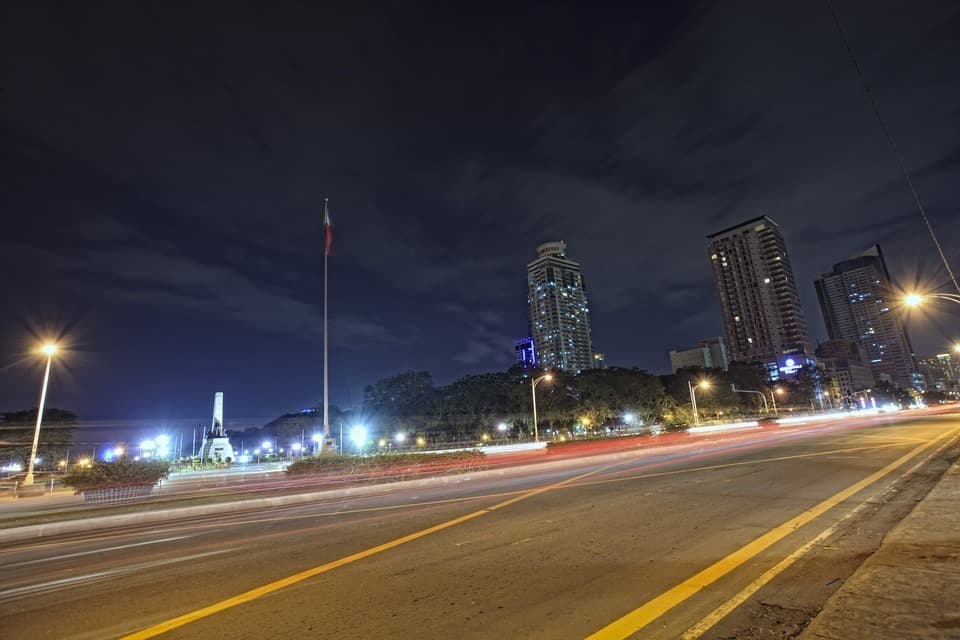

Manila, Philippines is a rapidly growing city that has recently gained popularity for investment in real estate. Here are five reasons why you should join in this trend:
⑴Population
As the capital city of the Philippines, Manila is located in the mid-western part of Luzon Island. The country’s total population is 100 million and is expected to reach 115 million by 2025. Among the 100 million people living in the Philippines, 15 million people reside in Manila making it highest population density city in the world. Although the population of immigrants is decreasing, Manila’s population is likely to grow in the future considering the average age of Manila’s citizens is 24.

⑵Income level
The average annual salary of Manila residents is relatively high compared to other areas in the Philippines. According to the Philippine Statistic Authority, Filipino’s average household income is $445,000 USD (445000 JPY), while that of people who live in Manila is $717,000 USD(717000 JPY).
⑶Rent fee and price level
Because many condominiums are close in proximity, Manila’s property is in excessive supply. However, rent price is set at a high level when compared to other countries, and the average investment yield is 8.6% which is very high in Asia. The high rental rates continue to increase it as office rent fees around Manila Bay increased 20% in 2015. Additionally, the vacancy rate is only 10%, and if you look at only high-end condominiums, the vacancy rate is under 5%. Considering the fact that that of Japanese rental houses/rooms is over 20%, it is feasible to make a profit. Moreover, investors can purchase estates at a cheap price because prices in Manila are only one-third to one-fifth of prices in Japan. Yet, the price of estates continues to rise due to increasing interests in Manila’s estates.

⑷Development
Metro Manila remains the only urban area in the county where its administrative power is legally defined. The Metropolitan Manila Development Authority (MMDA), established in 1995, is in charge of disposal of refuse, road and railway extension, and environment policy. Moreover, the Philippine’s National Economic and Development Authority is planning to develop its ideal transport infrastructure to solve the problem of traffic congestion in Manila with the goal to foster Manila’s sustainable development.
⑸Main industry
Surrounded by and inhibiting oceans, rivers, forests, and breathtaking natural habitats, the Philippines has very active agricultural, forestry, and fishery industries. Particularly in Manila, outsourcing business is also gaining popularity. The Philippine economy continues to stably grow because it is unlikely to be affected by the international economy with its small amount of exports.
If you have any questions or would like to arrange a viewing, please feel free to contact us!